
Our Training
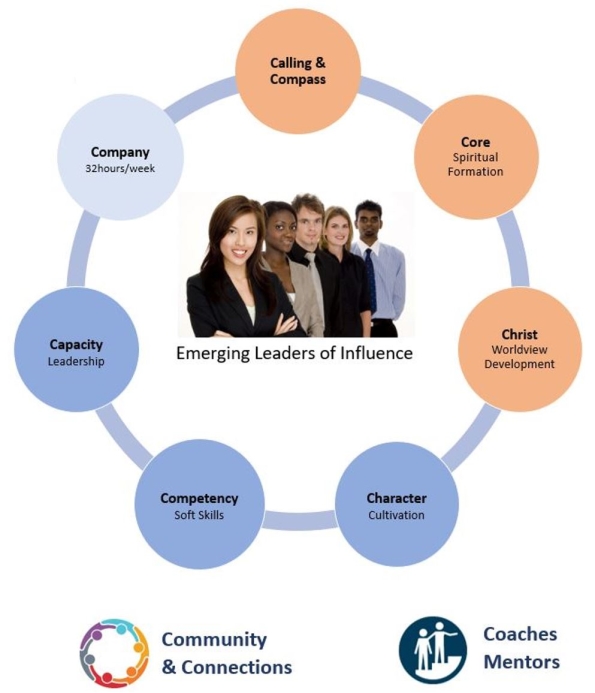 Learning happens in various ways, with experience often being the best teacher (though not a necessary one.)
1) Our ideal training would be that our trainees learn by doing, in real-time, in the context closest to what they will
experience when they exit the training. And then that they teach what they have learned.
2) Our understanding of the process of gaining influence for sharing the gospel and impacting culture, especially in a relational context and in workplace life, is mostly stepwise. Without first competency and character, sharing about Christ is difficult.
Baton Exchange curriculum consists of six tracks for optimum professional and spiritual development: Calling & Compass; Core: Spiritual Formation; Christ: Worldview Development; Character Cultivation; Competence: Soft Skills; and Capacity: Leadership Skills.
Coaches, mentors and a community of peers and seasoned guest leaders frequently provide the connection and relational context for the training for those who choose to engage through our Life2Life programs.
Learners can jump into the training cycle at any time. You don’t have to take all of the tracks. You can choose which tracks you want.
Can’t plug into a Life2Life program but still want to grow? Equip yourself through our resources, available on our website.
Want to learn more about our 6 Tracks? Click the titles below to read more.
[expand title=”Calling & Compass: Personal Mission Track”]
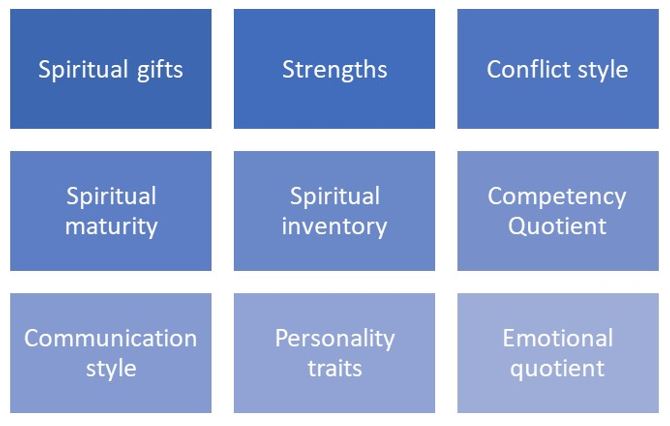 In the CALLING section of the module we help you lay a foundational understanding of calling, discerning God’s will and establishing better self-awareness. We use a variety of assessments to help you discover more about your design, because we believe that the design can reflect the Designer’s will or intent and call. A well-rounded self-awareness can reveal growth edges as well as be a foundation for life and leadership as a follower of Jesus at work, at home and in your community.
In the COMPASS section we use what you learned in the Calling module to help you develop a personal mission statement framework which you can then use throughout life as a guide, or compass, for important life decisions. This can provide you with a better sense of direction and a tool for avoiding unnecessary stress.
Training Focus/Sessions/Topics
- Different by God’s Design
- Understanding Calling
- Basics for Discerning God’s Will
- Developing a Personal Mission Statement
- Integrated, Balanced Life: Faith, Family, Work
[expand title=”Core: Spiritual Formation”]
Our leadership approach, the what, why and how of our influencing, is rooted in our heart and in our head. In order to effectively lead or influence over the long haul for Christ, we need to have our hearts and heads aligned with His. We need to be solid at our core. Our hands and habits should follow. This module addresses some core issues of the heart, head, hands and habits and lays a foundation for looking up, in and out. We also often have used life coaches to help you work on inner barriers that will deter you from a life of effective leadership and flourishing relationships.
Training Focus/Sessions/Topics
Looking In: The Heart
1. Personal Foundations. Because “hurt people hurt people,” and leaders have an amplification affect as they grow in influence, it’s important that young leaders heal from the wounds of the past so that they can lead more effectively in the future. The Personal Foundations sessions help trainees identify wounds and begin the healing process.
2. Identity. What you think about yourself- whether lies or truths- impacts how you relate to yourself, others, and God. It impacts your ability to influence, your productivity and your overall health. You will uncover any identity lies you may be believing and establish an understanding of Christ as the focal point of your identity.
3. Spiritual Disciplines. Learn about and begin practicing various spiritual disciplines in order to catalyze a deeper relationship with and maturity in Christ. Develop an understanding of what it means to live the new life in Christ and demonstrate fruit.
4. Anxiety. If you’ve ever been anxious about the future, you’re in good company: King David, author of the Psalms, experienced anxiety many times and wrote about it. As an emerging leader, you will encounter many situations that could make you feel anxious. Learn the root causes of anxiety, how
to eliminate those you have control over and mentally pivot away from those you can’t so that you can experience the peace and freedom Christ desires for you.
5. Adversity: God’s Development Process for Change Agents. Studies show that 95% of all leaders previously experienced significant adversity. Young leaders should expect it. Take time to identify how God has used adversity in their life, be able to articulate a theology of suffering and receive heart and head tools for how to deal with adversity when it comes.
6. Sabbath & the Young Professional. Young adults are concerned about life-work balance. Yet they rarely see it modeled or heard it taught. Fellows will learn how observing sabbath can bring freedom as they learn to trust God for the future and increase their effectiveness as leaders. They will be
encouraged to establish a life-long practice of keeping the sabbath.
Looking In: The Head
1. Basic Logic & Critical Thinking. Employers list critical thinking skills as one of the top development needs of young professionals. It’s also pretty important for “adulting” as well as living faithfully as we follow Jesus in our culture. These sessions help you to develop a foundation of critical thinking that strengthen your discernment and empower you to make wise decisions.
2. Worldview. We all have a way of seeing the world. How we think about the world and our place in it influences how we engage with God, others, ourselves and our environment. It informs how we explain what’s messed up in the world and how that mess ought to be fixed. But we know from life experience that not all solutions are truly helpful. Develop an understanding of God’s grand narrative and the biblical worldview and tools for evaluating and discerning the worldviews.
3. Apologetics. Can you confidently provide thought-through reasons for why you believe what you believe about Jesus, the bible and the Christian faith? Develop confidence as you learn the remarkable truth of the historical Jesus, the reliability and trustworthiness of scripture and why the Christian faith is unique among all other worldviews.
4. Failing Forward & Growth Mindset. All change agents experience failure as they seek to advance a cause. But how we view failure, and what we do with it, makes all the difference. You will adopt a heart attitude and head framework for how to make the most of failure. Knowing how to fail forward will catalyze you to take risks and develop resiliency: both important for influencing change.
Looking Up
1. Fatherhood of God. It has been said that how we view our earthly father will influence how we see our heavenly father. But since our earthly fathers are inherently flawed by sin, we get a distorted picture. To have a whole relationship with the heavenly Father, we need to understand His nature and character, which is not distorted. By understanding our heavenly Father, we can better understand ourselves. We can be more effective in fighting spiritual battles and advancing the cause of our King. This outcome has close ties to the inner healing section.
2. Obedience (Lordship). Change agents are ambassadors of their Lord. To be an ambassador is to serve and represent the interests of the sender. If are not submitting our will to Christ as Lord of our lives, then we will not be optimally effective. You should come to better understand the necessity of obedience to Christ and begin practicing it.
3. Generosity & Stewardship. We are God’s stewards of the time, talent and treasure we possess. Young adults who establish this stewardship mindset and practice a lifestyle of generosity as they start their career can have a tremendous cumulative impact over their lifetime. You will be exposed to the biblical perspective on stewardship and be given practical application tools for stewarding well (like budgeting, student loan debt reduction strategies, living simply, etc…)
Looking Out
1. Serving one another – SERVE framework. God is constantly modeling and calling us to reach out, to serve and love others. Trainees should develop an understanding of how to serve well and begin practicing. The bible has a lot to say about “one-anothering!”
2. Hospitality. Hospitality is essential for reaching unChristians and building community within the Body. You will gain a biblical perspective on hospitality and be encouraged to begin practicing it while in the training. [/expand]
[expand title=”Christ: Worldview Development”]
In the Core: Spiritual Formation part of our training, you acquire tools for understanding and evaluating the basics of worldview. In this section, we drill down and focus on specific applications and concepts for engaging the workplace and culture as change agents for Christ while we tie it back to having a Kingdom perspective. A Kingdom perspective must include a theology of work, which should inform our character and drive for competence.
Because this track is module-based, and offered in a program cycle (12 months), participants can jump into the training at any time. These modules may be the only formal biblically based career and leadership development training a trainee may receive, as secular universities do not offer comparative and most churches don’t either. It’s a unique opportunity to shape perspectives before getting firmly engrained in one’s career and subsequent lifestyle choices.
Training Focus/Sessions/Topics
1. God, Humans and Work. Is vocational ministry occupation the best calling for us? Is worshiping God through prayer, dance, and song the only way to worship? What does it mean to live an integrated life and how should that connect to our work? How is man like God, and what has God showed us about Himself regarding work? Develop an understanding and foundation of key principles from the bible on God’s viewpoint on work. Learn about the different occupations that reflect God’s image (you’re probably pursuing one of them), and how to invite God into your work day. What you discover may prove liberating!
2. Spiritual Influence @ Work and the Marketplace. Learn how to take sharing about Jesus out of the religious box and weave it into your life at work in appropriate, timely ways. Prayer foundations: Practical principles are reinforced through in-session role playing. The role of prayer in sharing our faith in our workplace context. Bridge Building: Building relationships at work: the essentials for connecting with co-workers. Sharing about Jesus. Learn practical tools to initiate spiritual conversation in natural ways.
3. Christian Marketplace Ethics. How will I handle unethical situations at work? It’s not if they come up, but when. You will learn about facets of God’s character that provide a foundation for solid ethical decision-making. You’ll also acquire practical tools for handling dilemmas in the workplace or classroom concerning sexual issues, employee issues, customer interactions and a general ethical dilemma decision-making tool.
4. Christians & Cultural Influence. What should be the role of a Christian in the world? Should they intentionally seek to influence their culture? If so, how? Learn how to give back and make a difference strategically. Those taking this module will gain an understanding of: cultural/societal Transformation Basics; Why God directs us to be involved in transformation; Spiritual Traps, Authority & Spiritual Warfare associated with transformation; The importance of Problem Solvers & Networks; the essentials of influence. Everyone has a worldview and every company has a culture. Will you be able to engage with those who have a different one? Why is developing cross-cultural competence important?
5. Hot topics. Everyone’s trying to sell you on something, including what to believe about a lot of key areas of life. What have you bought into? What viewpoints should you buy into? Have you ever bought something you regretted? Build awareness of the major areas of apologetic discourse in today’s culture (e.g. creation-evolution, family-sexuality, science, sexual identity, the nature of truth, relativism, tolerance, etc…), their biblical big-picture key ideas and resources for digging deeper in order to understand and discern what our culture wants us to buy into as compared to what God’s best is.
6. Justice in the City. What are God’s thoughts on issues of justice for the marginalized? What are big picture strategies for pursuing justice in a biblical manner? How do we actually work to address social issues God cares about? How do we help “seek the peace and prosperity of the city,” as described by the prophet Jeremiah? What criteria should we consider before joining a cause? Learn the biblical narrative on social justice and solutions that fit within God’s design for how things ought to be.
7. Transformation Metrics and Indicators & Micro Cultural Transformation: If you want to make a difference, give generously, serve diligently and think strategically. If you want to give of your time, talent or treasure, you should understand some of these basics in order to be strategic in your efforts: community transformation and development basics; 10 Transformation Strategies; and Macro Cultural Transformation principles.
8. Macro Transformation: Seven Cultural Mountains. Trainees will gain an understanding of the seven different cultural spheres or mountains of influence (Arts & Entertainment, Business, Education, Government, Media, Family, and Religion) and how strategies are integrated across the spheres to catalyze cultural and societal change at micro and macro levels. We will be “drilling down” into the different spheres, with the help of guest leaders from most of those spheres. They will be equipped to identify indicators of cultural and social change initiatives happening around them.
9. Transformation Projects & Cases. Historic and contemporary case studies (some via movies) will be reviewed to highlight the principles. A compare contrast will be conducted to reveal how the principles can be used in cultural for redeemed and unredeemed purposes.
10. Discipleship 101 – under development. We are called to make disciples, yet how many of us know how? You will learn the practical “how tos” of making disciples in your spheres of influence.
11. Church Planting 101 – under development. 20-Somethings are in a perfect time of life to be a part of church planting movements. You will learn about the basics and challenged with a vision to plug into church planting movements in your city. [/expand]
[expand title=”Character Cultivation”]
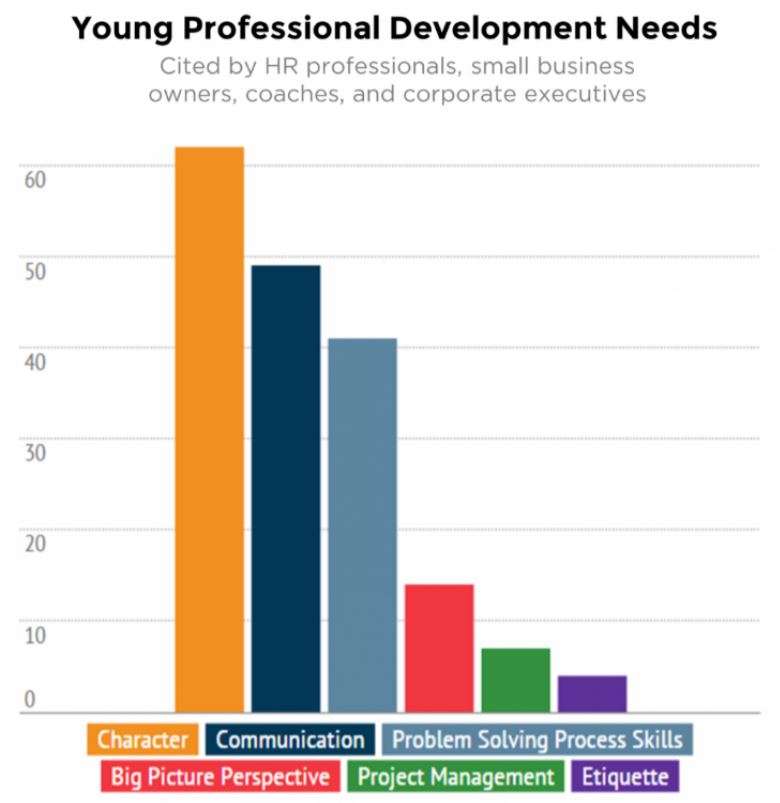
66% of the employers, leaders and young professionals we surveyed said that character development is the number one development need of young professionals. Without excellence in character, you can’t maintain an influence for Christ in the marketplace or culture. You will study the character attributes employers are looking for and come up with actionable, accountable plans each month to cultivate those attributes.
The character traits we study include:
Diligence, Humility, Honesty, Responsibility, Dependability, Gratitude, Productivity, Courage, Patience, Forgiveness and Grit. [/expand]
[expand title=”Career Competency Workshops”]
A Harvard study shows that 85% of career success is related to your people skills, or professional competencies (the other 15% are technical skills.) In the competency module we have identified what the competencies are and deliver them to you through mid-manager and executive-level training so that you don’t have to spend frustrating years trying to figure out what development to focus on, but can start strong in your career with confidence and poise.
| Topics include: | ||
| Communication Skills Conflict Resolution Skills Managing Your Emotions Stress Management Selling Your Idea Group Facilitation 101 |
Building Trust Personal Finances Project Management Building Collaborations Big Picture Thinking Problem Solving Skills |
Working Cross-Culturally Business Etiquette Networking Resume Writing Job Search Skills Clerical Office Skills 101 |
[expand title=”Capacity: Leadership Skills”]
In the capacity module we help you to develop your leadership capacity. You’ll start by learning and practicing the servant leadership model. When you complete the capacity module you will go from some basic leadership skills, where you might be creating some of your own limitations and aggravations to a practical leadership skills toolbox, where you will experience more confidence and wisdom in knowing how to lead through influence.
Training Focus/Sessions/Topics
- SERVE. Leading by serving
- Influencing your boss
- Influencing peers
- Influencing subordinates
- Situational leadership
- Barriers to Effective Leadership
- Failing Forward
- Connection is the Key to Leadership